(Editor’s note: DeeDee Wood is the owner of Black Cat Curiosities, an online antiques research and sales venue.)
Thanksgiving is coming soon, and during this time period, more formal dishes might come out of the pantry and grace tables with dishes only used during holidays, like stuffing or cranberry sauces.
There was a time that formal dining services had a dish or a plate for everything, including foods and garnishes we may no longer consume, but once were thought unusual or exotic. 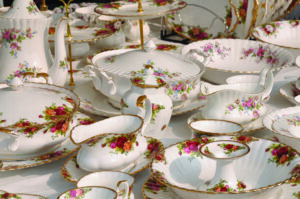
A few of these dishes that might have been used are things like celery vases, salt cellars, gravy boats, bread plates, asparagus servers and butter dishes with ice compartments, just to name a few.
In the 19th and early 20th century, keeping food hot, cold and protected from insects and smoke was a common kitchen issue. Some containers had lids for such requirements, or slots for spoons to be utilized with the dish to serve. Many items ended up never being used, and might be deep back in the cabinet and serve other uses today.
If you regarded a large formal dining service from earlier times, you would find a few unusual side dishes that have lost meaning. Some of them included a crescent shaped dish that would be a on the side of a plate. Known as a bone dish, it held bones from the meat course you were consuming. Oysters were served at many special holidays, and there were fancy oyster plates that held individual oysters in their own slots. Tiny plates held butter and were called butter pat plates, given the name for the task of holding just a pat of butter for bread of the individual. Other dishes have uses and shapes a modern household may not recognize today, but are fairly obvious by their names. Fish platters, soup and sauce tureens for keeping both warm at old fashioned tables, and cheese dishes are a few examples.
Vegetables had their own category of dishes. Asparagus dishes contained an elongated design that also had drainage chambers to remove liquid from the often steamed vegetable. Celery vases stood upright and held long stalks of celery. Pickle dishes and servers held pickles, often times suspended in their brine. Covered vegetable dishes usually had heavy duty lids that would hold in the heat if the item was taken off of a pan from a hot stove and put inside, like corn, okra, potatoes, mixed vegetables, or greens.
Often times Victorian rooms were cold, even with a fire going, so it was imperative to trap the heat in a dish to enjoy hot. Many mystery dishes with divided compartments were actually divided to serve a variety of vegetables on one presentation platter.
Marrow dishes need their own category. Eating bone marrow is rarely done today. The fatty cream paste inside of larger bones was once removed by diners with a marrow spoon and enjoyed as a delicacy. A fancy 19th century china service would have options to have accompanying pieces purchased in addition to the standard set one could buy, and it included a marrow dish, which was more of a platter with a deeper recess in the middle to hold the bones once the center heart of the bone was enjoyed. Today, they can easily be mistaken for a standard platter, and older catalogue drawings of service sets can identify marrow plates or more unusual pieces.
Salt cellars should also be discussed through the lens of the use of salt. Salt cellars held individual salt servings for food. Salt can absorb moisture and was often times hard to shake through antique salt shakers with smaller holes. The cellar allowed the diner to take a tiny spoon and disperse the seasoning on their food with ease. Salt, once a rare commodity in earlier centuries, became more readily available during industrial times, as trade markets opened.
Next time you take out the complete set of antique serving pieces that lurk in your closet and come out once or twice a year, consider the crescent shaped bone plate that is now used for hummus, or the vase that now holds flowers that was once a celery container, or the strange shallow bowl that you toss a salad in that once held a marrow delicacy.
Knowing their uses and the enjoyment of dishes and tastes from the past help you connect to your roots, and the simple joys of enjoying the holidays at the table, as tastes and times change and grow.