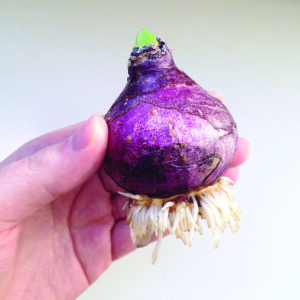
Spring flowering bulbs, such as hyacinths, seen above, alliums, crocus, daffodils and tulips can still be planted through November.
The garden may be slowing down, but there’s still plenty of activities to do and things to plant. Spring flowering bulbs, such as alliums, crocus, daffodils, hyacinths and tulips can still be planted through November.
Remember to make the hole two to three times as deep as the bulb is long, adding a tablespoon of Espoma’s Bulbtone or Bonemeal in the bottom of the hole.
Plant the bulb with the pointed side up and cover with a mixture of compost and topsoil.
Be sure to sprinkle a weed preventer over the newly planted bed, then apply a layer of mulch to help prevent soil erosion and keep the weed preventer in place.
Be sure to irrigate the newly planted area, especially if there is no rain, as moisture is important for the bulbs, so they get rooted before the ground freezes.
Don’t forget to dig-up frost tender summer bulbs and tuberous plants, to be stored indoors for the winter. Alocasia, Caladium, Canna, Colocasia, Dahlia, Gladiolus, and tuberous begonia, can all be dug up and wintered-over for next year planting.
Simply dig up the plants, remove all loose soil from the roots, the cut the foliage back to just above the bulb ( be sure to leave 4 to 6 inches of stem for canna and dahlia), then spread the plants out to cure in a dry area for one to three weeks.
Store the bulbs in a breathable container, such as a paper or mesh bag, cardboard box or nylon stockings.
Cover or layer the bulbs with peat moss, perlite, vermiculite or shredded newspaper. Be sure to store in a cool (40 to 50 degrees) dry place, and check periodically for shriveling or decay.
Ornamental trees and shrubs can still be safely planted now as the ground temperatures will still allow for good root development. It is also a good time to transplant other trees and shrubs that are in the wrong location, or ones that have outgrown the area.
Be sure to use Biotone root starter and a good compost like Leafgro when planting.
Pansies can still be planted now and can overwinter and return with early spring color.
Ornamental cabbages and kales can still be planted and will give more intense colors as the temperatures drop.
Consider replanting your porch or patio planters for the fall using pansies, ornamental cabbage or kale, heuchera, or ornamental grasses.
Even evergreen plants like arborvitae, boxwoods, dwarf Alberta spruce, and hollies can add a welcoming entrance to your home and can be used to begin your holiday decorating.
Continue to harvest your fall vegetable crops from the garden.
Greens like chard, collards and kale, as well as, turnips, broccoli, cauliflower, and Brussel sprouts will continue to produce in the cooler temperatures. If a threat of frost is coming, simply cover your plants with a frost cover or old bed sheets to prevent any freeze damage.
Cut back asparagus growth down to a 2 inch stub after the first frost. Apply a layer of mulch 4 to 6 inches deep to help control weeds, as well as gradually adding some organic matter and nutrients to the soil.
Be sure to insulate fig trees from sub-freezing temperatures with a layer of leaves, mulch or straw. Exposed wood is vulnerable to winter damage, when temperatures fall below 20 degrees for an extended period, so the mulch will protect the plants.
Any other area of your vegetable garden not planted, consider planting a cover crop of crimson clover or winter rye. You can also cover the beds with leaves or mulch to minimize the risk of soil erosion, nutrient runoff and weed germination.
One final job would be to gather a soil test from all areas of your vegetable garden and fill a ziplock sandwich bag. Take the sample to your county cooperative Extension service.
They will test for important information like pH levels, levels of nutrients, organic matter and lead.
A soil test should be done every other year and can be done anytime as long as the ground is not frozen.
When doing the final cleanup of your flower beds, consider leaving some leaves, dead plant stalks, stems and branches as they provide much needed winter habitat for butterflies, moths, fireflies, native bees and other beneficial insects that provide pollination and natural pest control.
A little mess can be a benefit to your garden for the next growing season.
However, be sure to remove any diseased plant debris, to take away the chance of having any overwintering plant diseases or fungus.
In your foundation planting beds, it is a good idea to remove all plant debris and leaves.
Consider taking a soil test if it has been a couple of years and be sure to add a little organic compost like leafgro or manure, as well as holly or plant tone at seasonal rates.
Check for and adjust soil pH and apply a weed preventer.
Apply a 3- to 4-inch layer of mulch on top to keep the additives in place, prevent erosion and protect the plant roots from extreme cold.
Enjoy your Thanksgiving holiday and Happy Gardening!
(Editor’s Note: Ken Morgan is the owner of Robin’s Nest Floral and Garden Center in Easton, Md.)