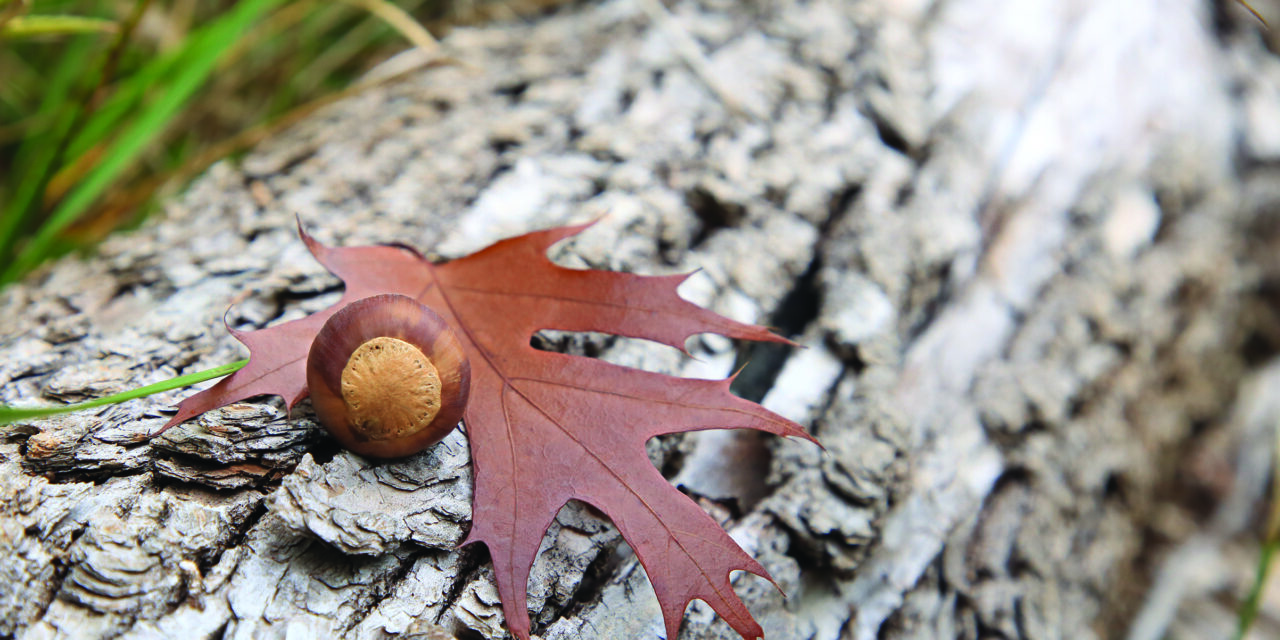
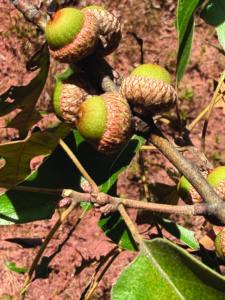
Mast season is a natural cycle that helps sustain wildlife, renew forests and shape the relationship between woodlands and surrounding communities.
Every fall, Maryland’s forested areas begin producing one of their most important natural food sources: Mast.
Some years it’s light, and some years — like this year on many parts of the Mid-Shore, it’s heavy, virtually raining nuts and acorns from the branches.
Lou Meyer, arborist for Davey Tree, recalled an earlier heavy mast year near his home in Howard County where three massive oak trees unloaded over his roof.
“I thought we were under attack, it was incredible,” Meyer said. As a tree lover, he still has a hint of glee in his voice. “It was non-stop machine gun fire above my head.”
While the bumper crop may be eerily entertaining for some to witness, it’s a grocery windfall for the wildlife who rely on the nuts and acorns to survive.
When production is low, wildlife must work harder to find food, potentially changing where animals live, what they eat and how they behave.
A year with abundant acorns may mean fewer animals traveling into fields in search of food.
A poor mast year can increase pressure on alternative food sources, forcing them to venture out into farm fields, residential areas and along roadways, which often spells trouble.
A heavy year also means a bump in those animal populations in years to come is more likely, which could also put pressure on the overall ecosystem.
“Anytime there’s an abundance of food, whatever’s feeding on that food will have more offspring in nature,” said Meyer.
Hard mast is particularly important going into winter because it provides energy-rich food for white-tailed deer, wild turkeys, squirrels, black bears and numerous other wildlife species.
Birds and small mammals also depend on these resources, while some animals will “squirrel away” nuts for later consumption.
For residents, landowners and farmers, understanding mast season offers a reminder that wildlife behavior is closely connected to forest conditions.
Andrew Kling, University of Maryland Extension natural resources agent associate, said oak trees and song birds have a symbiotic relationship.
More oaks growing in an area means more of the foliage certain native caterpillars like to munch on and those caterpillars are a good food source for native song birds and their young.
While it’s not a predictable phenomena, weather, tree health and tree’s natural reproductive cycles all factor in to how large a masting will be.
A nut or oak tree’s mast can vary considerably from year to year, but it usually runs on a loose cycle of two to five years between heavy masts, also referred to as mast years.
Some tree species also exhibit synchronized reproduction, producing unusually large seed crops in certain years.
“Trees communicate, they communicate in different ways,” Meyer said. “It’s not out of the ordinary that they can kind of coordinate a masting.”
Mast production also affects forest regeneration.
Oak trees produce enormous numbers of acorns, but only a small fraction survive to become seedlings.
A bumper crop creates a better chance that at least some of the seeds escape hungry animals and insects.
For oak trees especially, that’s important, Kling said.
“They are definitely a challenging species to grow in the wild right now,” he said.
Deer prefer oak saplings to many of the invasive and non-native plants that have invaded forests.
“They’ll ignore the Japanese stilt grass and they’ll ignore the mile-a-minute because they don’t have a taste for them, which allows the non natives to crowd out the native plants in the understory,” Kling said. “So it’s kind of a vicious circle.”
The more oaks growing gives them all a better shot they have to make it out of the deer’s browsing line and outcompete with other plants in the understory.
Ultimately, mast season is much more than an mesmerizing shower of nuts.
It is a natural cycle that helps sustain wildlife, renew forests and shape the relationship between Maryland’s woodlands and surrounding communities.
“A lot of folks look at nature as just this thing that’s out there and, ‘Well, the trees always leaf out and always drop nuts,” Meyer said. “But it’s dynamic. There are changes that are happening all the time.”