(Editor’s note: DeeDee Wood is the owner of Black Cat Curiosities, an online antiques research and sales venue.)
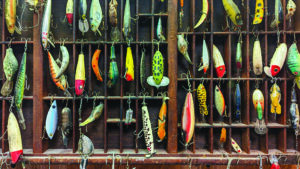
Antique fishing lures are extremely collectible in the market. There are many different kinds and ages.
Summer brings to mind many things, but in the heat of July, in many places around the world, tackle boxes, nets, floats and fishing poles come out for a day on the water.
Whether casting a line from the shore, in a dingy, or off the edge of a large vessel, fishing and the gear/items used to aid in the catch can sometimes be antiques, and are often quite collectible.
Since the dawn of time, fishing has been important. From survival for food, to a cherished past time with friends or family, fishing has always been with us.
The earliest tools known that were made for this endeavor were simple nets to capture fish and the catch out of waters, crude poles to spear, bone and wooden “hooks” fashioned to catch fish, and other things made from natural materials.
As time went on, mechanisms were made to assist with ease of the sport, and materials upgraded as technology found ways to improve on the way things were made and utilized.
There are many different types of fishing gear in the antiques world that are collected.
Nets, floats, poles, lures, tackle boxes and more can be highly sought after for collectors.
As vast as the sea, the gear used by fishermen is also vast.
There are many different genres, types, styles, colors, materials and ages.
A discerning eye is needed to weed through all of the categories to determine worth and age.
Fishing reels are the mechanism that spin the line on poles to help reel in fish out of the water.
The first known ones (line reels) were developed in China, with illustrations showing inventions as early as 300 AD.
European and American manufacturers developed this idea further, with many patents for reels showing up in the 1800s as the Industrial Revolution was in full swing.
Collectors value Kentucky Baitcasters and British Fly Reels, among others.
Glass fishing floats are a popular, often pricey antique item to collect.
Glass fishing floats were invented in Norway in 1840, replacing wooden or cork floats, that could often become waterlogged. They were later utilized by Japan in the early 20th century for commercial fishing.
Today, these recycled glass orbs are highly prized by collectors and beachcombers worldwide.
Like most glass objects, color matters, so blues and aquas are prized, along with more rare colors, such as purple or even red. Hand blown and usually one-of-a-kind, a buyer has to be careful not to buy a reproduction.
A tell-tale sign of an antique float is the pontil mark, or spot were the glassblower disconnected the creation from the glass rod that made it in glassblowing.
Antique fishing lures are extremely collectible in the market.
There are many different kinds and ages.
They are basically vintage artificial baits, highly prized by collectors for their craftsmanship and historical significance, identified by the materials used to create the lure.
The most popular years and most prolific period for lures would be the late 19th/early 20th-century.
Antique dealers and buyers seek handmade wooden lures, unique creations that involve hand painting or other details that make them one-of-a-kind, such as glass eyes, wooden joints, folk art creations specific to regions or countries, and even the original packaging.
Some rare or handmade lures can command big prices at auctions.
The tackle box itself is a collectible antique item. Early boxes from the 1800s were made from wood, with some people using leather pouches to hold gear.
The boxes sometimes had names or maker stamped on them, and were often handmade.
As time marched on, metal boxes were invented to keep out water and be more durable, in the early 20thcentury onward.
Plastic started to dominate the market in the 1950s when it was beginning to be used in commercial item production, and compartments, doors, sections and organization inside these early plastic boxes helped people fishing stay more organized.
The wooden boxes from the 19th century are valuable, especially if found with gear still left inside.
Other items of interest for antique fishing gear are vast, and too much to list.
Highlights would include nets, hand tools for cutting lines or cleaning fish, poles of all shapes and sizes, early gear made out of bone, wood, shells or bamboo, rope and ties, antique lines made out of silk or horsehair, spools, catalogues and advertising, and even clothing used for fishing and outdoor sport.
Fishing is synonymous with summer and the ol’ watering hole.
Images of a by-gone era with a line and a pole create nostalgia for the collector, and the interest and ingenuity of early people fishing, and the creations they made to help with the catch, spur on collectors of these unique, classical summer sport items today.