(Editor’s note: When it comes to historical significance, Maryland’s Eastern Shore can stand with just about any other area of the United States. It’s carried through today in the names given to towns, rivers, streets and creeks, but more than 200 years later, their origins may not be so widely known. Drawing from “Discover Why It’s Called …,” a 1990 booklet by John Dexter Nilsson, here is one of those stories.)
England’s Queen Anne had 17 children 12 who died shortly after birth and the others quite young.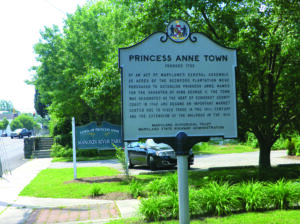
Upon her death in 1714, succession passed from the Stuarts to the Hanoverians, with George I ruling 1714-27 and George II (1727-60). George II had three sons and five daughters, one of whom was a princess named Anne, and she married Prince William of Orange in 1734.
For early settlers, the head of navigation on a river was almost always site of a town, transfer point from boats to land transportation.
The village at the head of the Manokin River was Princess Anne, laid out in 1733, and was named for the princess. It’s main street was named Prince William Street for her husband.
It became the county seat in 1742 when Worcester County was split off and the old courthouse at Dwindling Creek was too far away from the center of the new county area.
Princess Anne still retains its Colonial-era atmosphere, with several early buildings, one private cottage built in 1705, another, the Washington Hotel and built in 1744, is still in use.