(Editor’s note: DeeDee Wood is the owner of Black Cat Curiosities, an online antiques research and sales venue.)
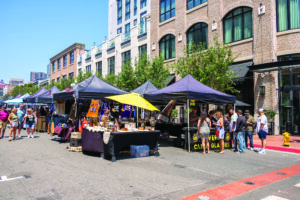
For many collectors, the true excitement of the flea market comes from something referred to as the “thrill of the hunt.”
June is here, and that kicks off the prime summer flea market season. Roadside stands, dusty remote barns, city lots and tents of treasures, flea markets have an interesting history and great potential for the collector or professional reseller.
The term “flea market” comes from a few ideas — one, being the markets of open air sales in 19th century Paris had, among other things, infestations of fleas in bedding, clothing and other porous surfaces.
Other versions of the origin describe mispronounced words and “fleeing” the city while it was under various regimes.
No matter what the real truth of the matter is, the modern-day flea market is part treasure, part junk, and a day of fun.
Unlike traditional stores and sales venues that sell collectibles and antiques, a flea market is ever-changing.
Markets such as this, especially in summer months, involve setting up temporary displays in barns, side fields, tables outdoors, fairgrounds, city parking lots and other places where wares can be spread out and considered.
There are many choices and sub-groups within these sales venues, and many choices and vendors tend to follow the trends of a particular geographical area.
Two of the most famous flea markets in the world are the Marche aux Puces de Saint-Ouen near Paris, and the Brimfield Antique Flea Market held on the east coast each year in the United States.
Some people have heard of the term “flea market,” but have no idea what to expect if they go to one.
Ideas and notions of what to find for our antique purposes would be summer garden statues, old fountains, signs, home decor and folk art of the region.
Not all objects at a flea market are antiques. There is also the interesting junk, bagged items, old parts to things, and mass-produced, resold items, just to name a few.
Established flea markets that have semi-permanent ways to display items might see jewelry vendors sell their offerings, as well as antiques, such as silver and silver plated containers and items.
For many collectors, the true excitement of the flea market comes from something referred to as the “thrill of the hunt.”
This concept is what makes flea markets something people look forward to during cold winter months.
When one shops at a flea market in modern times, there is a nod to nineteenth century
Paris markets of old, with many different types of wares being offered in those historical markets, often referred to as “marches aux puces,” or literally “market of the fleas.”
Today, you can see the modern equivalent to these types of markets, from rugs, furniture, jewelry and other offerings of home and hearth.
Some people view the term to be more junk than treasure, but it all depends where and when you go to seek out deals and treasures.
Do not confuse a true flea market with a yard sale or garage sale in the summer.
A flea market is usually composed of real dealers with knowledge of the antiques, collectibles, household goods or jewelry they sell, where yard or garage sales are normally families or individuals trying to sell unwanted items from their dwelling or business.
Flea markets can be somewhat organized, occurring on a daily basis, or sporadically, happening in conjunction with timed events or summer and fall festivals.
Flea markets occur worldwide, with a slight tweak in their official names.
France always has had the love for a good sale, and in that country you can find sprawling sales in many different venues throughout the year, but mainly in warm weather months.
England has something similar called a “boot sale” where items are sold from the boot of the car, while Latin America, with open-air access occurring most of the year, finds a wide variety of folk art and village goods on display in certain regions.
Regionally, aside from antiques and other items, food can be offered as a choice of sale — especially in larger venues or specialty areas where culinary delights are famous.
Next time you are taking a road trip and see a sign along the side of the road that a flea market is 5 miles dead ahead, pull in, browse, buy what can fit in the backseat, and enjoy a special outing that has roots in 19th century Paris, and grew out of the love of the hunt for treasures.