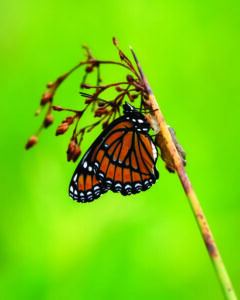
Monarchs depend on relatively small areas of forest in Mexico and California where they can survive the winter.
Few sights in nature are more remarkable than a Monarch butterfly riding the autumn winds southward, traveling hundreds or even thousands of miles toward a destination it has never seen before.
Every year, millions of monarchs participate in one of North America’s most extraordinary migrations. The eastern population travels from breeding grounds across the United States and southern Canada to overwintering forests in central Mexico. A smaller western population migrates to coastal California. The journey is remarkable not only for its distance, but because no single monarch completes the entire annual cycle. Instead, several generations carry the migration forward.
The U.S. Fish and Wildlife Service describes monarchs as one of North America’s most recognizable migratory species. Eastern monarchs can travel nearly 3,000 miles between their northern breeding grounds and their wintering sites in Mexico. The butterflies that make the fall journey are known as the “migratory generation” and can live for as long as eight or nine months—far longer than the two to six weeks typical of other generations.
A migration passed from generation to generation
The monarch’s annual cycle begins in late winter and spring when butterflies leave their Mexican wintering grounds and begin moving north. They lay eggs on milkweed along the way, and those eggs develop into caterpillars and then adult butterflies.
The new generations continue northward, eventually reaching the northern United States and southern Canada. During late summer and fall, the process reverses. The special migratory generation emerges and begins the long trip south.
What makes the migration especially fascinating is that the butterflies arriving in Mexico have never made the journey before. Yet they somehow navigate to the same general overwintering region used by generations before them.
In Mexico, monarchs gather by the millions in high-elevation oyamel fir forests. Scientists monitor their abundance by measuring the amount of forest occupied by overwintering colonies rather than attempting to count individual butterflies. That measurement provides a useful indicator of the population’s overall health.
A dramatic decline
For as staggering an achievement it is for monarchs to complete the migration, the species’ decline in numbers is equally and conversely monumental.
According to the U.S. Fish and Wildlife Service, an estimated 380 million eastern monarchs made the journey to Mexico in the mid-1990s. Today, the eastern population is estimated to have declined by about 80 percent. The western population has fared even worse, declining by more than 95 percent since the 1980s.
Another way of seeing the decline is through the amount of forest occupied by monarchs in Mexico. The long-term trend since then has been downward, despite substantial year-to-year fluctuations.
There is, however, some encouraging news.
During the 2025-26 winter season, monarchs occupied approximately 7.24 acres of forest in Mexico, a 64 percent increase from the 4.42 acres recorded the previous winter. The increase followed a nearly 100 percent increase the year before.
That is welcome news—but it should not be confused with a recovery. A few good years do not erase decades of decline. The population remains far below historical levels. For comparison, WWF and its partners reported that nearly 45 acres of forest were occupied by monarch colonies during the winter of 1995-96.
The recent increase demonstrates something important, however: Monarch populations can respond positively when weather and habitat conditions improve.
What is threatening
the migration?
There is not one single threat to the monarch butterfly. It is the cumulative effect of changes occurring across thousands of miles of migration and breeding habitat.
Loss of milkweed is one of the biggest problems. Monarch caterpillars can eat only milkweed. Adult butterflies feed on nectar from many kinds of flowering plants, but without milkweed there is nowhere for monarchs to lay their eggs and no food for their caterpillars.
The loss of milkweed and flowering habitat has occurred through development, changes in land management, intensive agriculture, herbicide use and the removal of vegetation along roadsides and other open spaces. The Xerces Society notes that the widespread adoption of herbicide-resistant crops contributed to significant milkweed loss in agricultural areas.
Pesticides are another concern. Insecticides can directly kill monarchs and other beneficial insects. Herbicides can eliminate milkweed and flowering plants that monarchs need. The U.S. Fish and Wildlife Service identifies pesticide exposure as one of the significant threats facing the species.
Drought can reduce milkweed and nectar plants. Severe storms can kill migrating butterflies. Unusual temperatures can disrupt the timing of plant growth and flowering. Conditions in the Mexican overwintering forests can also affect survival. WWF reported that favorable weather, including less severe drought along portions of the migration route, helped contribute to the 2025 population increase.
Loss and degradation of overwintering habitat also matter. Monarchs depend on relatively small areas of forest in Mexico and California where they can survive the winter. Illegal logging, fires, drought and other forms of forest degradation can damage those sites. The 2024-25 survey in Mexico found that 6.30 acres of forest had been degraded, with illegal logging accounting for the largest share of the documented damage.
What can gardeners do to help?
The good news is that helping monarchs does not require owning hundreds of acres.
A backyard, farm, schoolyard, church property, park or roadside can become part of the monarch’s migration corridor.
The most important step is to plant native milkweed. Because monarch caterpillars depend exclusively on milkweed, providing the right species in appropriate locations can create breeding habitat where none previously existed.
But milkweed alone isn’t enough. Adult monarchs need nectar throughout the growing season. Planting a variety of native flowers that bloom from spring through fall provides food during migration and breeding. The Xerces Society specifically recommends a combination of native milkweed and nectar-producing plants.
Gardeners can also:
• Choose native plants rather than relying exclusively on ornamental plants.
• Leave some areas of a property unmowed during periods when monarchs and other pollinators are using them.
• Avoid removing milkweed simply because it is sometimes considered a weed.
• Provide flowering plants from spring through fall rather than having a garden that blooms for only a few weeks.
• Participate in monarch and pollinator monitoring programs so scientists can better understand population changes.
Just like the millions of butterflies forming an unequalled specatacle of nature every year, doing their part to keep the species’ life cycle turning and turning, keeping monarch migration moving in the right direction will take millions of small efforts to create something much larger — a continent-wide network of habitat giving the monarch a better chance to complete one of nature’s greatest journeys.