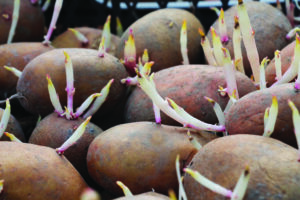
If you plant potatoes you can plant a new crop, just after harvesting the spring crop, and it will be ready for harvest in late October or early November.
August is typically considered the vacation month by many, as kids are getting ready for a new school year and many of us just need a break to relax.
With these and other things to do, our gardens and landscapes sometimes take a back seat. It is not always easy to go outside in the heat and humidity to water, weed, harvest fruits and vegetables or take care of plant diseases and pest.
The fact is to have a successful fall vegetable garden, and have healthy, vibrant annual, perennial and landscape beds, there are still jobs to be done to make this happen — as gardening activities really don’t take a vacation.
Begin preparing your vegetable garden for the fall planting season.
Remove all previous plant remains from the spring. If you plant potatoes you can plant a new crop, just after harvesting the spring crop, and it will be ready for harvest in late October or early November.
You can plant seeds of carrots, kale, lettuce, radish, spinach and turnips as well.
Be sure to plant the seed at least 1 inch in the ground to allow for a good root development before the first sprouts appear.
Cold crop vegetable starter plants of broccoli, brussel sprouts, cauliflower, cabbage, lettuce, kale and other greens begin to become available around the middle of the month.
It is also a good idea to harvest the herbs you wish to freeze or dry for winter use this month.
Remember herbs are most flavorful, harvested in the early morning before the sun dissipates the essential oils that give them their flavor.
If you have a strawberry bed, now is the time to fertilize them for next years crop.
I suggest Espoma’s Berrytone at a rate of one cup per foot of branch spread.
Double the quantity if branch spread is three foot or more. It is rich in natural and organic ingredients and is enhanced with humates and beneficial microbes.
No sludges or fillers are ever used, and it is long-lasting and a slowly released formula.
This is the perfect blended fertilizer for blueberries, blackberries, raspberries and strawberries.
Strawberries set their fruit buds in the late summer/early fall for next springs crop, which is why the need a good fertilization program now. It is also important to maintain adequate water to all these berry plants now as well.
A slow, soaking of water around the plants during some August dry spells will ensure good fruit bud production and a good crop for next spring.
Watering is also critical for fruit trees in August, especially peach trees.
Adequate watering about two weeks before the tree is to be harvested will get the flesh to swell and result in large fruit.
With hot, humid weather come disease problems. Both downy and powdery mildew can affect vine-type vegetable crops at this time of year.
Downy mildew causes problems, on beans, cucumbers and cantaloupes.
The fungus causes yellow to dark areas on the upper surface of older leaves, and on the under-side of the leaf you will see patches of whitish or gray-colored mold.
The mold can also occur on bean pods and the affected vines may be scorched and killed.
Powdery mildew appears as white or brownish talcum-like growth on leaves and young stems of squash, pumpkins, cantaloupes and cucumbers.
It sometimes can be found on fruit, especially grapes, and if left untreated, it can turn plants yellow, and they can wither and die.
To control both of these diseases, the practice of rotating the location where they are planted each year, and provide good spacing in between the plants to allow for good air flow.
Remove and dispose of any infected plants at the end of the growing season to prevent the disease from over-wintering into the next growing season.
Be sure to use a fungicide once the plant is infected, that contains copper, which is the best and only effective product available to home gardeners and it is also approved for organic gardening.
This time of year annual and perennial flower beds can look a little ragged.
Be sure to pick-off the old, dead flowers.
Spending a little time grooming these plants will make a big difference in the garden’s over-all appearance.
It will also prevent the flowers from going into seed production and should allow them to continue flowering longer into the fall growing season.
Finally, spring-flowering perennials can be divided and transplanted this month or next.
Be sure to do this during the coolest part of the day, and water the plants thoroughly after transplanting.
Happy Gardening and remember to stay hydrated when outside during the hot and humid days.
(Editor’s Note: Ken Morgan is the owner of Robin’s Nest Floral and Garden Center in Easton, Md.)