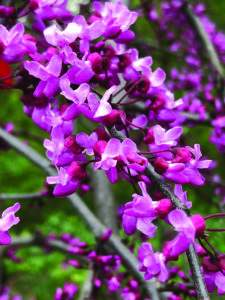
The Redbud is a small tree, growing 5-6 feet tall with an elegant weeping habit, so it can fit beside a patio. (Photo by Ginny Rosenkranz)
Redbud trees or Cercis canadensis are small ornamental native trees growing 20-30 feet tall and wide.
“Ruby Falls” is a cultivar of the Eastern Redbud tree, a cross between Cercis canadensis “Covey” which is a weeping form and “Forest Pansy,” which has purple foliage.
The trees bloom from late March to April with bright lavender edible flowers on bright red stems before any of the leaves emerge.
The half-inch wide flowers bloom profusely in clusters of four to 10 on bare, arching branches, creating a colorful waterfall.
Unlike the native species, Ruby Falls does not create many seedpods that decorate some Redbuds.
It is a small tree, growing 5-6 feet tall with an elegant weeping habit, so it can fit beside a patio, in a small garden, as a lovely specimen or in small groups, in full sun or under the shade of larger deciduous trees without taking up a lot of space.
Like all the native Redbud trees, “Ruby Falls” has heart-shaped leaves that are placed on the weeping branches in an alternate fashion, starting small with rich red-purple leaves and bright green veins that grow, then during the latter part of summer turn from burgundy to green.
These heart shaped leaves can grow 3-6 inches long and wide, and with their alternate placement of the arching stems, increase the waterfall look to the tree.
Not only is this a beautiful and colorful tree, but its flowers also provide nectar for many species of native bees, butterflies and early hummingbirds.
Although they create very few seedpods, the ones that are created are enjoyed by native birds.
Plants thrive in full sun to partial shade and prefer to grow in moderately fertile soils with regular moisture and good drainage.
The plants are cold-hardy in USDA zones of 5a to 9b and are resistant to deer.
(Editor’s Note: Ginny Rosenkranz is a commercial horticulture specialist with the University of Maryland Extension.